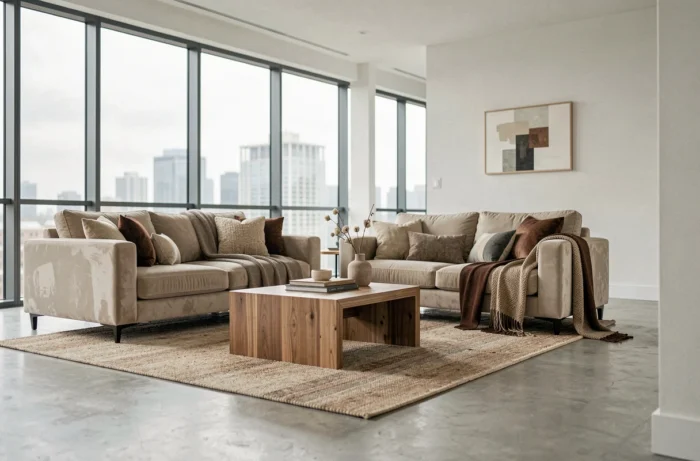
Modern decoration is no longer limited to white walls and minimalist furniture. Current trends favor warm interiors, where textures overlap and each piece tells something about its occupants. Here are ten concrete ideas to transform your interior with decoration that is both modern and elegant.
1. Deep color accent wall to structure the living room
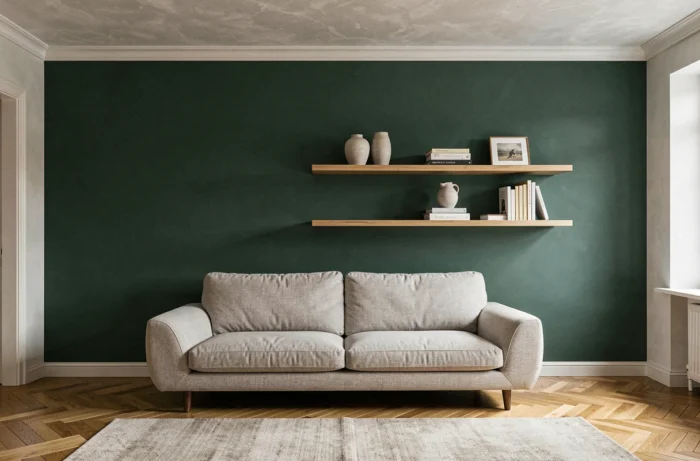
Painting a single wall in plum, midnight blue, or olive green radically changes the perception of a space. This accent wall draws the eye and adds depth to the living room without darkening the entire room.
You can also apply it to a niche or recess to create a framing effect around a shelf or piece of furniture. A deep color on one wall is enough to anchor the entire palette of a room.
To explore ranges of furniture and objects that match these shades, you will find interesting references on the Espace Déco website, particularly for wood and metal finishes.
2. Layering natural textures on the sofa and seating
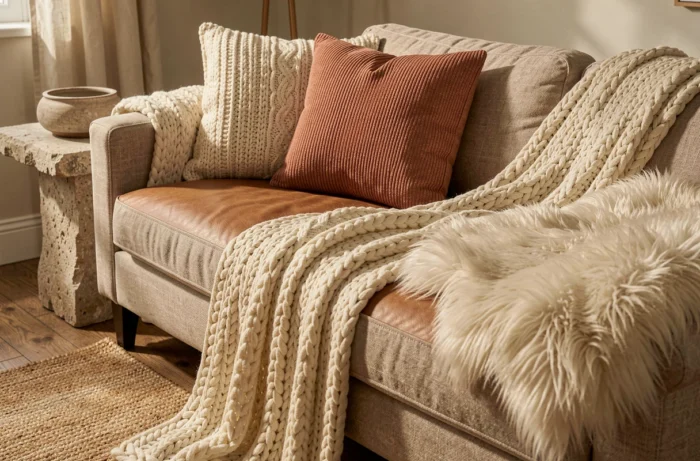
A solid fabric sofa takes on a whole new dimension when you add a boucle wool throw, crumpled linen cushions, and a sheepskin on the armrest. This play of materials creates visual relief and an immediate sense of comfort.
The combination of linen, wool, and wood works in almost all styles. The principle is simple: each textile should have a different texture or thickness from the previous one. Two identical cushions side by side flatten the effect.
3. Architectural lighting with multiple sources
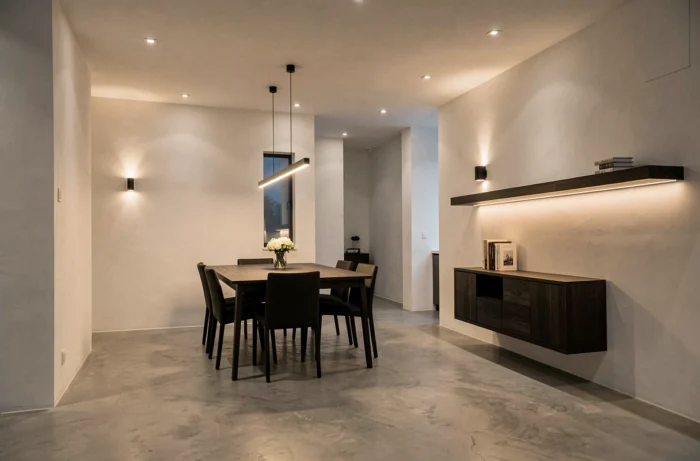
A central ceiling light provides illumination, but it doesn’t create ambiance. The current trend is to multiply light sources: a wall sconce that grazes a textured wall, a reading lamp next to the sofa, a low pendant above the dining table.
The idea is to adapt the atmosphere to the time of day. Directing a beam on a texture or object transforms an ordinary corner into a focal point. LEDs allow for varying color temperatures, from warm white in the evening to neutral white for work.
4. Metallic finishes in touches to capture light
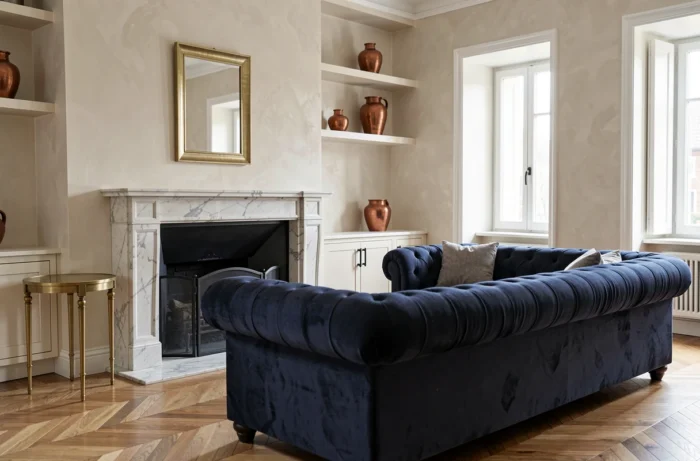
After several years dominated by matte finishes, shine is making a comeback in small doses. Brushed brass on furniture handles, chrome table legs, a copper candlestick on a shelf: these metallic accents capture natural light and add dimension.
The trap would be to coordinate everything in the same metal. Mixing brass and aged gold in the same space works very well, provided you keep one metal dominant and a second as a discreet accent.
5. Solid wood dining table as a central piece
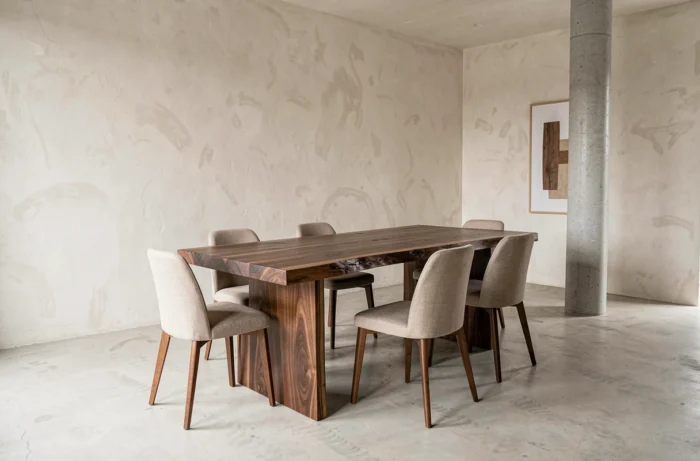
The dining room is regaining its role as a convivial space. A solid wood table, with its visible grains and slight imperfections, provides a natural anchor that lacquered furniture does not offer.
Choosing certified or recycled wood adds a sustainable dimension without compromising aesthetics. Oak, walnut, and ash remain the most sought-after species for their grain and durability.
6. Lime paint for lively walls
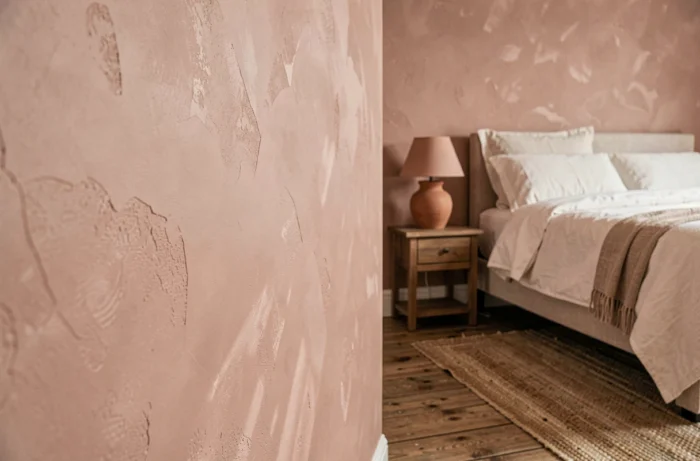
Lime paint creates slightly irregular surfaces that react to light. The result is a wall that seems to breathe, far from the uniform flatness of standard acrylic paint.
This type of finish is particularly suitable for the bedroom and living room, where a soft atmosphere is sought. Tobacco brown and eggplant shades, applied with lime, produce a depth effect that standard paint does not replicate.
7. Furniture with rounded shapes in small spaces
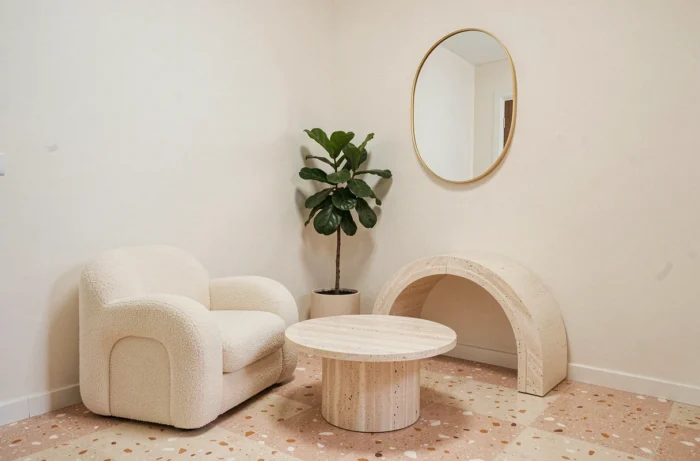
Right angles mark the boundaries of a space. Curves, on the other hand, fluidify circulation and visually soften a room. A chair with rounded lines, an oval coffee table, or a circular mirror are enough to relax the atmosphere of a small living room.
This choice is not just aesthetic: in a small space, rounded furniture allows for movement without bumping into things and gains a few centimeters of passage.
8. Waffle textile and XXL weaving for decorative accessories
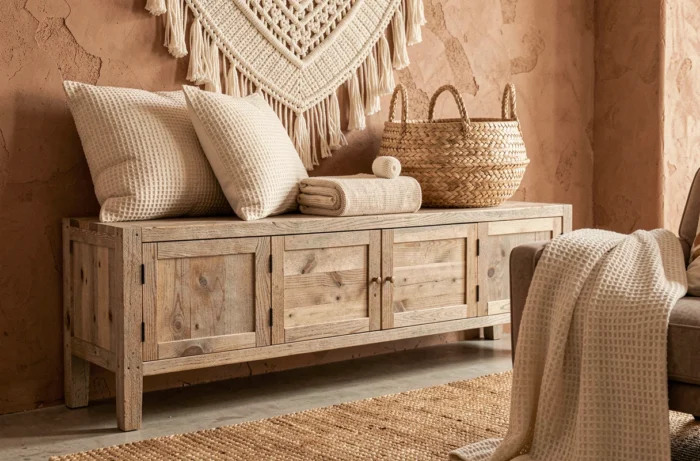
Waffle textile (bedspreads, towels, curtains) adds volume without overwhelming. Its textured surface captures light differently depending on the angle, which enlivens a sober decor.
XXL weaving, found on baskets, pendants, and some poufs, produces a similar effect on a larger scale. These two techniques share a common point: they add material without adding extra color.
9. Handmade and local pieces as signature objects
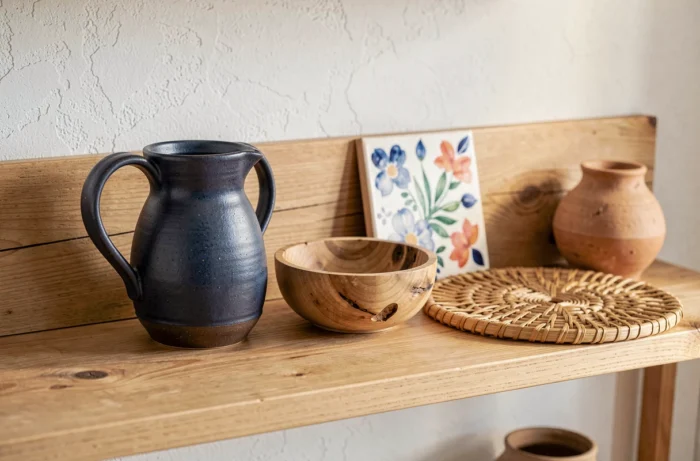
A handmade ceramic vase, a lamp from a local artisan, or an object made from recycled metal play a role that mass-produced items cannot fulfill: they create uniqueness. Two interiors following the same trends can differentiate themselves through these unique pieces.
Sustainability is no longer limited to natural materials. Current criteria also include reparability and provenance. Choosing an object whose origin is known also ensures that it can be maintained or restored.
10. Reading nook or functional niche in the bedroom
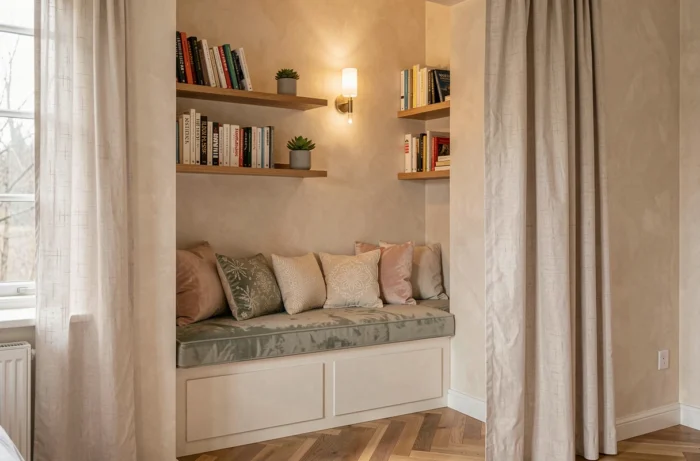
Creating a dedicated corner in the bedroom, even a small one, changes how the room is inhabited. A niche with a thick cushion, an adjustable sconce, and a small shelf is enough to create a reading or resting space distinct from the bed.
This type of arrangement also works in a wide hallway or under a staircase. The idea is to give a specific function to an unused corner, rather than defaulting to placing a storage piece there.
Modern and elegant decoration relies less on a unique style than on coherent choices between materials, light, and colors. A successful interior mixes natural textures, thoughtful lighting, and a few pieces with strong personality. Each modification, even modest, can be enough to transform the atmosphere of an entire room.


