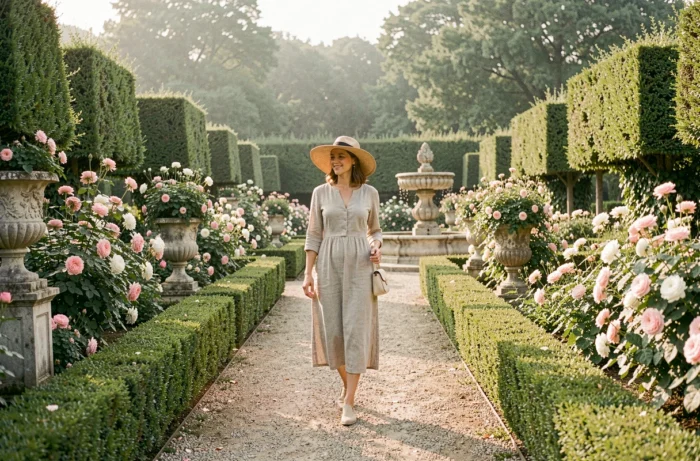
A public garden is not just a simple green space. It is a place designed, maintained, and staged according to specific botanical, historical, or artistic principles. The most beautiful gardens to visit in France stand out for their diversity of styles, from classical flowerbeds to orchestrated wastelands, and for their ability to transform a stroll into a true sensory experience.
Remarkable Garden Label: the selection criterion to know before you go
The Remarkable Garden label, created in 2004, is the main official reference for identifying a quality garden in France. It distinguishes parks and gardens that have proven aesthetic, botanical, or cultural interest. In 2022, there were 461 labeled gardens across the territory.
This label is not static. The Botanical Garden of the Desert of La Désirade in Guadeloupe was labeled on November 26, 2024, as were the gardens of the Château de Valmer the same year. This recent dynamic shows that the scope is expanding to include associative and overseas sites, far from the cliché of the aristocratic Loire garden.
To organize nature getaways around these places, a useful resource remains escapades-aux-jardins.fr, which lists thematic routes adapted to each region.
Specifically, the label guarantees several verifiable elements on-site:
- Regular and documented maintenance, with an identified botanical management plan
- A coherent landscape composition, whether classical, contemporary, or mixed
- A structured public welcome, with signage and cultural mediation
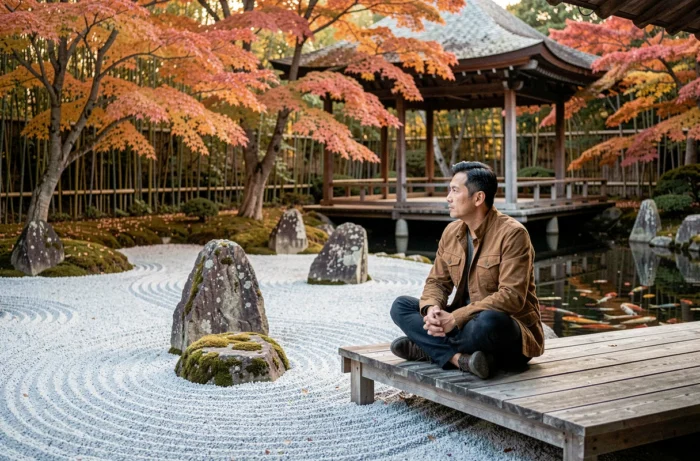
Sensory theme gardens: an approach that changes the visit
The majority of articles on beautiful gardens in France focus on the visual aspect: flowerbeds, perspectives, seasonal colors. However, some gardens have developed paths based on the five senses, radically changing the visitor’s experience.
The Garden of the Five Senses in Yvoire, Haute-Savoie, remains the historical reference for this approach. Each space stimulates a different sense: touch through foliage textures, smell through aromatic beds, hearing through water features.
A sensory garden can be visited with eyes closed as well as open. This design logic is now extending to therapeutic gardens and spaces designed for people with disabilities. Sensory accessibility is becoming a quality criterion in its own right, beyond just physical accessibility.
What this changes for the visitor
A sensory garden is not photographed in the same way as a classic garden. The value of the visit lies in the slowness, the direct contact with plants, sometimes tasting. Families with children find a concrete exploration ground here, where a French-style garden often requires staying on the paths.
Garden festivals: when the park becomes a cultural stage
Gardens are no longer just places for contemplation. The Open Gardens festival in Île-de-France reached a record attendance of nearly 105,000 visitors in 2026 over two months, for more than 200 green spaces and about 600 scheduled performances.
Since its creation ten years ago, this festival has brought together nearly 700,000 visitors in total and involved more than 1,700 gardens. These figures reflect a shift: the garden now functions as a seasonal cultural stage, with a program of concerts, readings, performances, and botanical workshops.
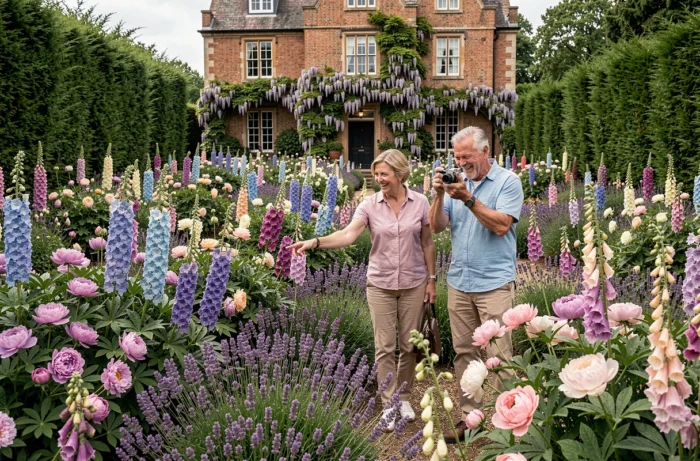
Chaumont-sur-Loire, the model of the exhibition garden
The International Garden Festival of Chaumont-sur-Loire, in the Loire Valley, takes this logic even further. Each year, landscape designers from around the world create ephemeral gardens around a set theme. The result resembles more of a contemporary art biennial than a traditional horticultural stroll.
This type of event attracts an audience that does not usually visit historical gardens. Event-driven activities transform the garden into a cultural destination, with an annual renewal that justifies repeated visits.
Three French gardens worth a detour for different reasons
Rather than an exhaustive list, three examples illustrate the real diversity of French gardens and the concrete reasons to visit them.
The gardens of the Eyrignac manor, in Dordogne, represent topiary art taken to its highest level. The boxwoods and hornbeams are trimmed into geometric shapes maintained for several centuries. The visit is worthwhile for both the technical rigor and the aesthetics.
The Oriental Park of Maulévrier, in the Pays de la Loire, is the largest Japanese garden in Europe. The arrangement of stones, water features, and vegetation follows the principles of Japanese landscaping. The night events organized during the season add a contemplative dimension that daytime visits do not allow.
The Exotic Garden of Èze, on the Côte d’Azur, occupies a site perched several hundred meters above the Mediterranean. The collection of succulent plants and cacti thrives thanks to the microclimate. The panorama of the sea is an integral part of the landscape composition, making it a garden where the geographical setting is as important as the botany.
- Eyrignac for the mastery of pruning and the structured plant architecture
- Maulévrier for the change of scenery and the philosophy of the Japanese garden
- Èze for the alliance between xerophytic plants and maritime landscape
Each garden responds to a distinct design intention. Choosing which one to visit depends less on a ranking than on what the visitor is looking for: formal rigor, cultural journey, or the encounter between vegetation and geology.


