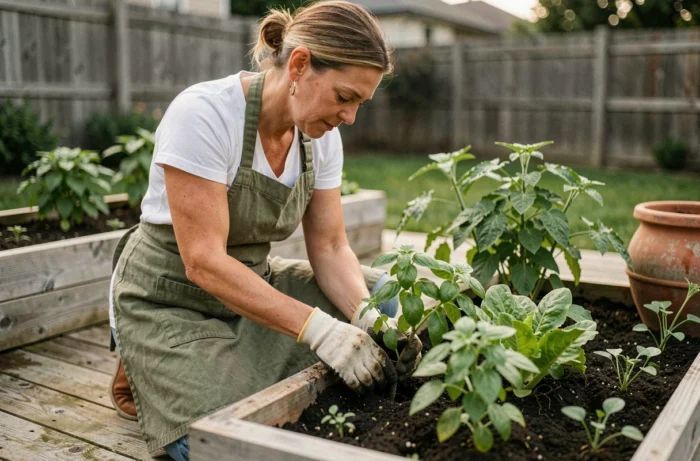
Growing an organic vegetable garden at home involves working with living soil, seasonal cycles, and health constraints that synthetic fertilizers cannot compensate for. Success relies less on the cultivated area than on the quality of decisions made in advance: choice of location, soil preparation, variety selection, and management of organic inputs. Each mistake costs more than in conventional farming because the margins for correction are narrower.
Herbicide Residues in Compost: An Underestimated Risk in Organic Gardening
Homemade compost or manure obtained from a neighboring farmer forms the fertilizing base of an organic vegetable garden. However, contamination by persistent herbicide residues poses a real danger to crops. Some herbicides based on pyralid or aminopyralid survive the composting process and can damage sensitive crops like tomatoes, beans, or squash.
The typical symptoms (curled leaves, distorted growth, weak plants) are often attributed to disease or overwatering. Recent technical sheets from American university extensions recommend conducting a bioassay test before using any suspect input: sow a few bean seeds in a pot filled with the compost to be tested, then observe the germination over two weeks. If the seedlings show deformities, the batch must be discarded.
For a reliable organic vegetable garden, prioritize compost whose origin you control. Avoid manure from fields treated with residual herbicides, and systematically ask your supplier about the treatments applied to pastures. Detailed resources on organic fertilization and managing an organic vegetable garden are available on the Jardinage Bio website for vegetable gardening, which addresses these issues practically.
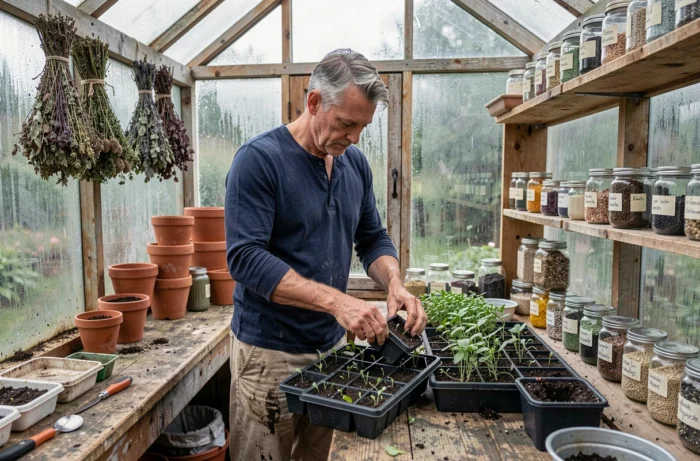
Cover Crops in the Home Garden: Protecting the Soil Between Seasons
Leaving the soil bare between the end of summer harvests and spring plantings exposes the land to erosion, nutrient leaching, and weed proliferation. Cover crops, long reserved for professional market gardening, are gaining traction in home vegetable gardens.
The principle is simple: after the last harvest, sow a plant that will occupy the soil during the fall and winter. In spring, it is mowed and incorporated superficially, or left as mulch. Iowa State University has published a guide for amateur gardeners on implementing these cover crops on a small garden scale.
Which Species to Choose for a Cover Crop in the Garden
The choice depends on the sowing season and the desired objective:
- Legumes (crimson clover, vetch) fix atmospheric nitrogen in the soil and naturally enrich the plot for the next crop.
- Grasses (rye, oats) produce abundant biomass that suppresses weeds and structures the soil deeply thanks to their dense root system.
- Crucifers (mustard) grow quickly, limit certain soil pathogens, and decompose rapidly after mowing, releasing nutrients accessible to spring crops.
A well-managed cover crop improves water retention and breaks pest cycles. In a small garden, a simple sowing of rye in October is enough to protect the soil throughout the winter.
Sanitation and Hygiene of Crops: The Forgotten Foundation of Organic Gardening
Without synthetic fungicides or insecticides, pest pressure is managed differently. Sanitation, meaning the set of hygiene practices in the garden, is the first lever of phytosanitary protection in organic gardening. The systematic removal of diseased plant debris significantly reduces pest pressure from one season to the next, as highlighted by several American university extensions.
In practical terms, this involves simple but rigorous actions:
- Remove and destroy (do not compost) any plant showing symptoms of fungal or viral disease.
- Disinfect pruning and harvesting tools between each planting bed, using a solution of alcohol or diluted bleach.
- Do not leave rotten fruits on the ground, as they harbor spores that contaminate subsequent crops.
This hygiene reflex is often neglected by amateur gardeners who attribute their losses to the weather or lack of fertilizer. In reality, a clean organic garden, well cleared of its residues at the end of the season, starts the following year with a significant sanitary advantage.
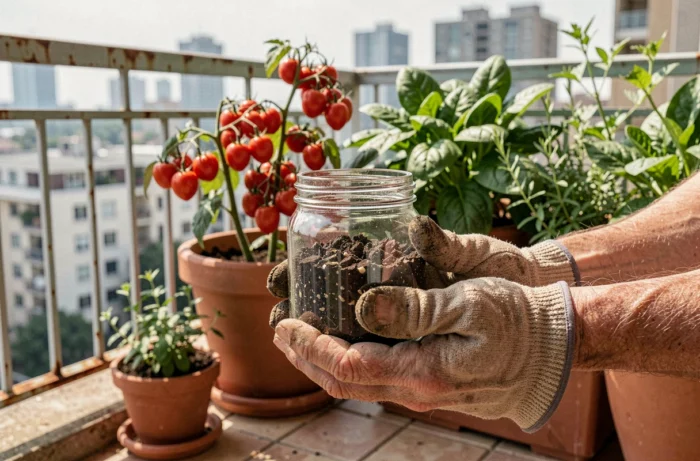
Trap Plants and Associations in Organic Gardening: Beyond Simplistic Tables
Guides on plant companionship circulate abundantly online. Most are based on gardening traditions whose scientific foundations remain weak. Field reports vary on this point: a tomato-basil association works in some soil and climate contexts, but not in others.
A more documented approach concerns trap cropping. The principle is to plant a species attractive to a specific pest on the periphery of the garden to divert the attack from the main crops. Nasturtiums attract aphids away from vegetables, while mustard can serve as a trap for flea beetles before cabbage sowing.
This technique requires observation and thoughtful positioning of trap plants. The trap only works if the attractive plant is in place before the pest arrives. Sowing nasturtiums in June, when aphids have already colonized the beans, has no protective effect.
Crop Rotation and Breaking Pest Cycles
Rotation remains the most solid pillar of sanitary management in organic gardening. Never grow the same botanical family in the same location two years in a row limits the accumulation of specific pathogens in the soil. Solanaceae (tomatoes, peppers, eggplants) are particularly sensitive to this accumulation.
In a small garden, a rotation over three or four years between fruiting vegetables, leafy vegetables, root vegetables, and legumes is sufficient to maintain a correct sanitary balance. The planting plan drawn in winter avoids placement errors in spring.
The success of an organic garden relies less on the accumulation of techniques than on the rigor applied to a few fundamentals: a soil covered and nourished by reliable inputs, strict hygiene of crops, and a pre-planned rotation. Each season refines the choices, and it is this consistency that makes the difference in the long term.


