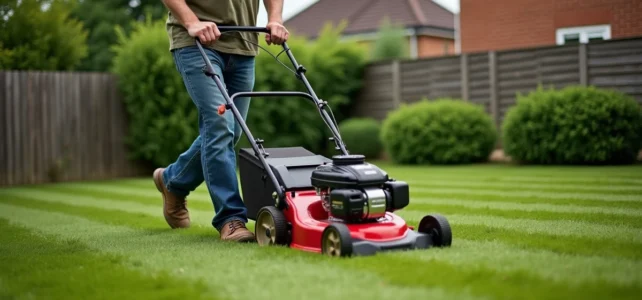
The power of a petrol lawn mower is measured in engine displacement (cm³) and determines the engine’s ability to drive the blade without stalling. Choosing this power means balancing the area to be covered, the type of grass, and often underestimated constraints: noise, the width of passage available between flower beds, or the time slots allowed for mowing.
Engine Speed and Grass Density: What Really Causes a Mower to Stall
The displacement displayed on the technical sheet tells only part of the story. A large displacement engine running at low speed in short grass never utilizes its full capacity. The criterion that matters on a daily basis is the ability to maintain speed under difficult conditions: tall grass after a week of rain, dense grass types like ryegrass, or wet areas along hedges.
Recent field tests show that a well-sized mower stalls less and produces a cleaner cut, not because of excess displacement, but because the engine maintains a stable speed against the resistance of the vegetation. A undersized engine, on the other hand, loses rotational speed as the grass thickens, which tears the blades instead of cutting them.
Before looking for the highest power of petrol mower in the catalog, it’s better to assess the actual density of your lawn and the intended mowing frequency. Regular weekly mowing significantly reduces the load on the engine, even with modest displacement.
Cutting Width and Displacement: A Pair to Balance
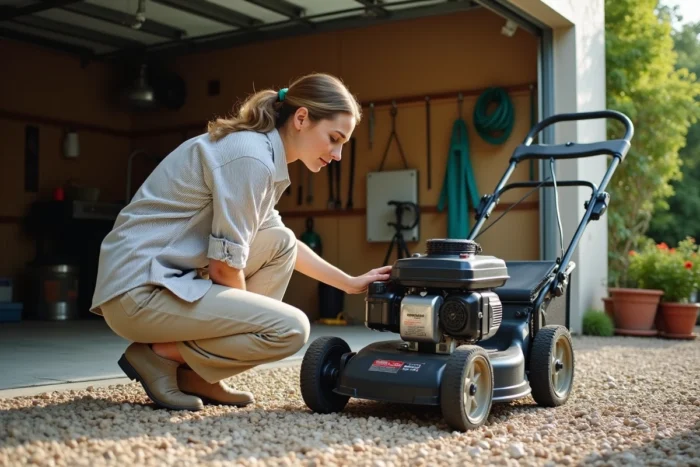
The cutting width acts as a force multiplier for the engine. The wider the deck, the more vegetation the blade encounters with each pass. A deck that is too wide for an underpowered engine produces a mediocre cut, especially in wet conditions.
Specialized guides recommend increasing the cutting width as the lawn area grows, in order to reduce the number of passes. But this logic only works if the displacement follows suit. Fitting a very wide cutting deck on an entry-level engine is like asking a small vehicle to tow a trailer that is too heavy.
Matching Area, Width, and Engine Power
For a modest-sized area, a narrow deck paired with reasonable displacement is more than sufficient and offers the advantage of maneuverability. On larger areas, a wide deck coupled with a higher displacement engine reduces mowing time without straining the mechanics.
- Small garden with flower beds and borders: prefer a narrow deck to navigate between obstacles, with moderate displacement that remains easy to maneuver
- Medium-sized open area: an intermediate deck and a mid-range engine represent the best compromise between speed and reliability
- Large open lawn: a wide deck paired with generous displacement reduces back-and-forth trips, but a self-propelled alternative should be considered beyond a certain area
Noise, Mowing Time Slots, and Passage Between Flower Beds: Limitations That Displacement Doesn’t Solve
Increasing engine power does not solve any of the following three problems and may even worsen them.
Noise increases with displacement. A larger engine runs louder, which reduces the time slots during which mowing remains tolerable for the neighbors. Local regulations often govern the hours of use for petrol-powered equipment: on weekdays as well as weekends, the allowed time slots vary from one municipality to another, and petrol mowers are among the noisiest devices in the garden.
The second trap concerns the width of passage between flower beds and trees. A landscaped garden with flower beds, low hedges, or fruit trees requires tight maneuvers. A powerful mower equipped with a wide deck becomes cumbersome in these areas. The result: you have to go back to using a brush cutter or string trimmer, which negates the expected time savings.
Traction and Ease of Use Rather Than Raw Displacement
Recent comparisons emphasize comfort criteria more than just raw power. The market’s upgrade trend is reflected in machines that compensate for displacement with other advantages:
- Self-propelled system with speed variator, which reduces physical effort on sloped terrain without requiring an oversized engine
- Electric start, which eliminates the pull cord and simplifies use for all body types
- Integrated mulching function, which finely shreds the grass and redistributes it as natural fertilizer, reducing collection frequency
A well-sized engine with traction is better than a large engine without assistance. On slightly sloped terrain, pushing a heavy and powerful mower without traction tires you out faster than using a self-propelled machine with lower displacement.
Engine Maintenance and Longevity: What Power Doesn’t Guarantee
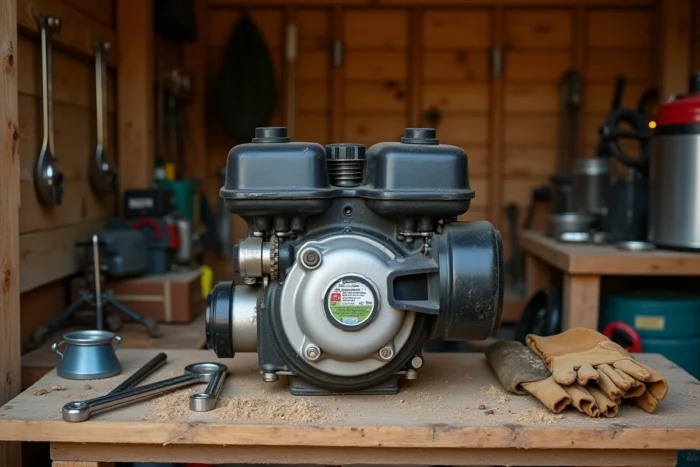
A petrol engine, regardless of its displacement, requires regular maintenance to maintain its performance. Oil changes, air filter cleaning, spark plug replacement, blade sharpening: these operations determine the machine’s lifespan much more than the number on the technical sheet.
A poorly maintained high-displacement engine quickly loses compression and efficiency. In contrast, a modest engine that is well maintained retains its speed season after season. The choice of power only makes sense if maintenance follows.
The availability of spare parts also deserves consideration. Engines from major brands (Briggs & Stratton, Honda, Loncin) benefit from a wide distribution network, making repairs easier. A generic high-displacement engine with parts that are unavailable after three years represents a poor investment, even if it had impressive power at the time of purchase.
Thus, the proper sizing of a petrol mower relies on a balance between displacement, cutting width, terrain constraints, and mowing habits. Raw power does not compensate for a garden poorly suited to the machine’s size, neglected maintenance, or time restrictions related to noise.