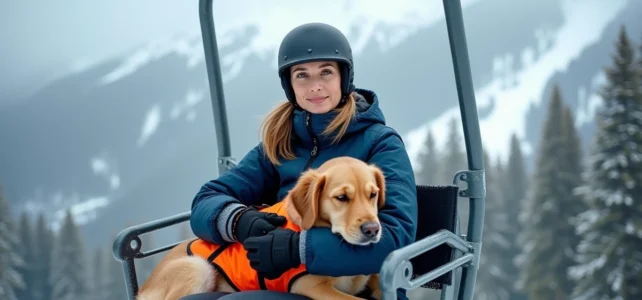
Taking your dog to the mountains in summer or winter raises a practical question as soon as you reach the ski lifts: can the animal ride the chairlift? There is no national regulation that settles this issue. The answer depends on each operator, each device, and sometimes even each time slot. This ambiguity requires preparation that goes beyond simply purchasing a ticket.
Guard Dogs and Pastoral Areas: The Risk Introduced by the Chairlift
Most articles on the subject focus on the chairlift ride itself. They overlook a problem that begins as soon as you arrive at the top: livestock guardian dogs.
In high-altitude pastoral areas, guard dogs autonomously protect the herds. They perceive any unknown dog as a potential threat. Incidents have increased in recent seasons, to the point that events like the Font-Romeu Trail now provide specific instructions: keep your distance, do not pet these dogs, and keep your own animal under strict control.
Taking a chairlift with your dog often means dropping it in the midst of a shared space with herds. Before even checking if the lift allows animals, you must inquire about the presence of guard dogs on the trails served by the lift. Some tourist offices publish maps of pastoral areas, but the information remains fragmented and rarely centralized.
Several dog owners discover the problem on-site, once they are at the top. Walking back down with an animal stressed by a confrontation with a guard dog is no small matter, especially on steep trails.
Access to Ski Lifts with a Dog: Rules Varying from One Device to Another
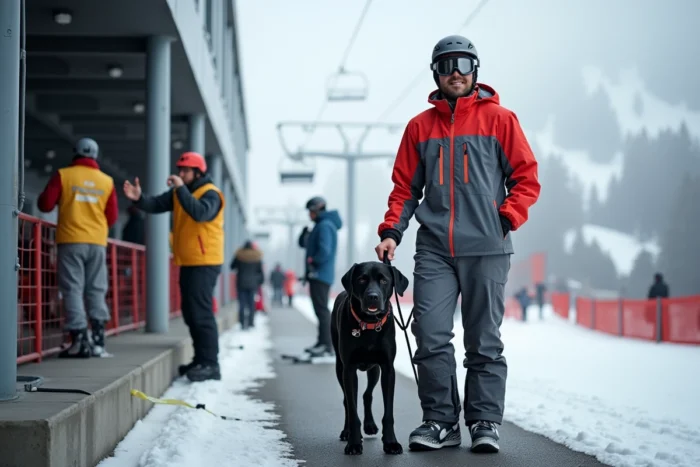
Each resort sets its own access conditions. One area may allow dogs on a detachable chairlift while refusing them on a closed gondola in the same sector. The season also plays a role: some resorts tolerate animals in summer, when attendance is lower, but prohibit them in winter.
To use a chairlift accompanied by your dog, you must contact the ski lift service of the intended resort directly. Websites do not always mention this information, and the conditions displayed at the ticket office may differ from what a phone standard indicates.
The trend observed in recent seasons is moving towards stricter regulations for dogs in the mountains. Routes like the one from Valberg to Tête des Éguilles now prohibit dogs, even those on a leash or carried. These restrictions sometimes apply to trails accessible only via ski lifts, making the lift ticket useless if the animal cannot take the path at the top.
- Check the internal regulations of each ski lift, not just that of the resort as a whole
- Ask if the permission also covers the trails served at the top, and not just the ride on the lift
- Inquire about any seasonal municipal orders that restrict the presence of dogs at altitude
Chairlift with Dog: Physical and Behavioral Preparation of the Animal
A chairlift generates stimuli to which most dogs have never been exposed: continuous mechanical noise, swaying, emptiness beneath their paws, and quick boarding and disembarking. The dog’s reaction to these stimuli cannot be predicted in advance.
A calm animal in the car may panic on a suspended seat. The lateral movement, the lack of a stable surface beneath it, and the noise of the pylons create a sensory cocktail very different from anything it knows. Field reports vary on this point: some dogs adapt from the first ride, while others remain frozen or try to jump.
Signals to Observe Before Boarding
The waiting line serves as a first test. A dog that is panting excessively, trying to back away, or showing the whites of its eyes in response to the noise of the cables is probably not ready. Forcing boarding under these conditions risks an incident during the ride.
The ideal is to position yourself near the boarding area without getting on, simply to observe the animal’s reaction for a few minutes. If the stress remains moderate and decreases over time, the ride can be considered. If anxiety increases, hiking from the valley remains the safest option.
Equipment and Positioning During the Chairlift Ride
The necessary equipment depends on the size of the animal. For small dogs, a front-facing transport bag or a suitable backpack allows you to keep them close during the entire ride. For medium to large dogs, the setup is more complex.
- A harness (not a collar) attached to a short leash, which is either secured to the safety bar or held firmly in hand
- A basket-type muzzle, often required by operators, which allows the animal to breathe normally
- A mat or blanket placed on the seat to provide a non-slip surface for the paws
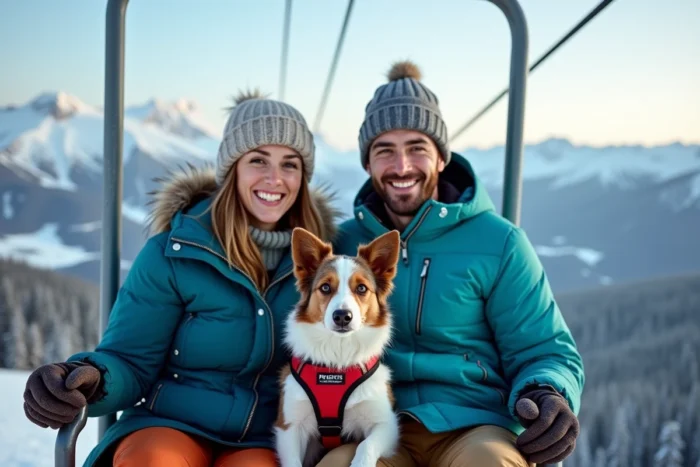
The dog must be positioned between two adults, never at the end of the seat. This configuration limits the risk of lateral falls and reassures the animal through physical contact on both sides. Upon disembarking, the passenger closest to the exit gets off first and receives the dog, while the second guides it from the seat.
Altitude and Hydration
The cardiac effort related to altitude also affects dogs. An animal that quickly moves from the valley to a summit via chairlift does not have time to acclimatize gradually. Ensure sufficient water supply and take a break of a few minutes at the summit before starting the hike to limit the risk of discomfort.
Short-muzzled dogs (bulldogs, pugs) particularly struggle with the combination of altitude and effort. For these breeds, available data do not define a safe altitude threshold, but caution recommends avoiding ski lifts that exceed the animal’s usual walking level.
Before planning a chairlift outing with a dog, the most reliable approach remains a direct call to the resort, coupled with checking pastoral areas and trail restrictions at the summit. The ride on the ski lift is just one step in a chain of conditions that must all be met for the outing to go well.