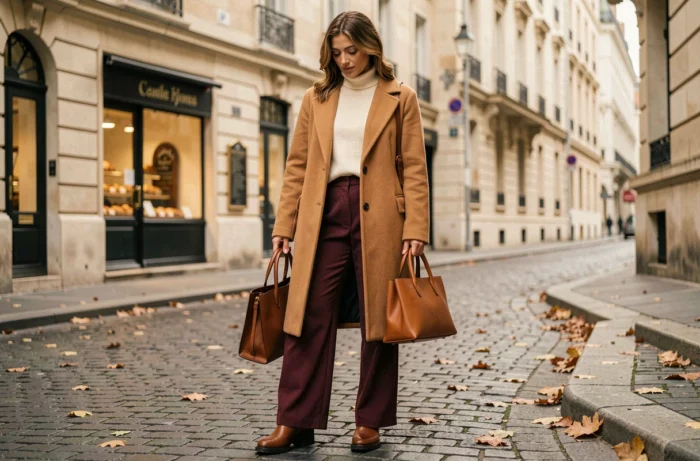
When you open your wardrobe in September, the question isn’t about replacing everything. You’re looking for two or three pieces that can change a silhouette without turning your closet into a runway catalog. This season, fashion trends focus on textures, sculpted volumes, and a return to personal expression that contrasts with the uniformity of quiet luxury. Here are the concrete guidelines to remember for creating a unique style without getting sidetracked.
Materials and Textures: What Really Changes in the Wardrobe This Season
We often talk about colors or cuts, but it’s the material that makes the difference in how it wears. This season, smooth leather, suede, and denim return in a trio on most structured pieces: jackets, trousers, midi skirts.
The key point to watch is the mix of textures in the same outfit. For example, pair a wrinkled linen top with soft leather bottoms, or a fluid silk shirt with rigid barrel jeans. This contrast creates depth without adding color.
Denim, in fact, is no longer limited to raw blue. It can be found in natural shades, from khaki to brown, sometimes treated to mimic suede. The current fashion trend values pieces that look like they’ve lived, not those that come out of packaging. To explore the current variations, you can check out the Perceptis fashion website, which features selections by type of piece and usage.
One practical tip: before buying a jacket or trousers, feel the fabric (or check the composition online). Opting for linen, merino wool, or thick cotton ensures better longevity and a more interesting drape than low-quality synthetic fibers.
Sculptural Silhouettes: How to Wear Them Without a Stage Costume
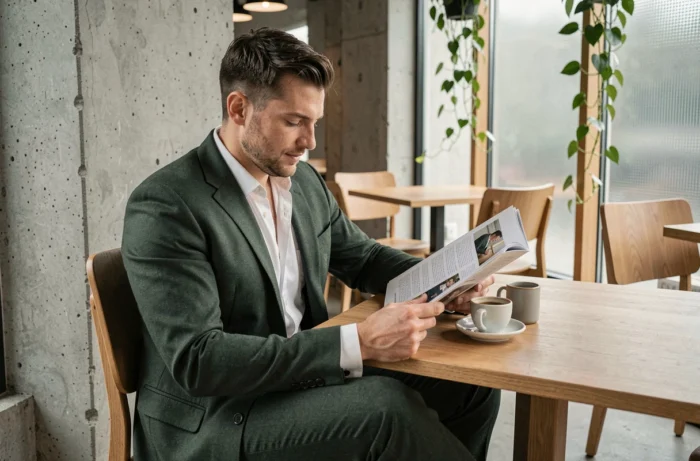
This season’s fashion analyses describe a return to marked volumes. We’re moving away from straight and oversized lines towards structured shoulders, defined waists, and skirts that create a sharp shape.
Specifically, we’re talking about aviator-inspired jackets with slightly padded shoulders, dresses that cinch above the hip, and pleated trousers that widen the leg below the knee. The idea is not to constrain the body but to create intentional volume.
To incorporate this without veering into stage costume territory, we apply a simple rule:
- If the top is structured (shouldered blazer, aviator jacket), the bottom remains soft and fluid (wide trousers, midi crepe skirt)
- If the bottom sculpts (pencil skirt, fitted pleated trousers), the top is more relaxed (oversized shirt, draped round-neck sweater)
- Avoid multiplying volumes on the same silhouette, unless you master proportions and confidently embrace a very bold look
The premium military style also returns in this realm. Khaki, olive green, and burgundy appear on pieces with patch pockets, metal closures, and sharp cuts. We’re far from camouflage: these pieces are worn with beige trousers or a fluid dress to break the uniform effect.
Colors and Prints: Focusing on Personal Expression Rather Than an Imposed Palette
This season marks a turning point. Rather than a single color declared “color of the year,” the trend pushes towards a wardrobe where each look expresses a personal choice. Subdued shades (beige, gray, brown) serve as a base, and a bold touch is added: bright red, emerald green, deep burgundy.
Animal prints remain present but as accessories rather than total looks. A bag, a belt, or a pair of leopard print ankle boots is enough to anchor an outfit in the season without falling into excess.
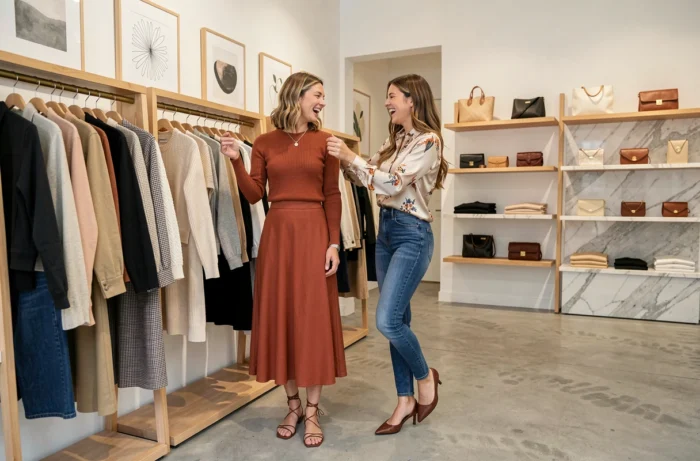
Ruffles and transparency, identified as rising trends on the runways, require more finesse in everyday wear. They are integrated in small touches: a ruffled collar on a classic shirt, a slightly transparent sleeve on a dark-colored top. The accumulation of trendy details in the same outfit produces the opposite effect of what we’re looking for.
Building a Look with a Single Strong Piece
The most reliable method for adopting fashion trends without losing your style: choose one strong piece per outfit. If it’s a burgundy aviator jacket, the rest of the outfit remains neutral. If it’s a dress with a marked texture, the accessories are kept discreet.
This principle works regardless of body shape or budget. It also avoids the pitfall of a seasonal total look that seems dated by the following month.
Second Hand and Regulation: The Concrete Impact on Style This Season
The second-hand market is no longer a militant choice; it’s a style lever. Finding a vintage leather piece or a structured blazer from the 90s allows you to achieve exactly the type of silhouette that the season values, often in denser materials than what you find new at equivalent prices.
The European Union has banned since July 2026 the destruction of certain unsold textiles for large companies, as part of the ESPR regulation. Meanwhile, France has banned PFAS in clothing starting January 2026. These two measures push brands to rethink their stocks and materials.
For us, as consumers, this means two things:
- Second life circuits (consignment shops, resale platforms, thrift stores) receive more quality pieces from end-of-series or non-destroyed returns
- New collections are gradually incorporating PFAS-free materials, which alters the feel and water resistance of certain technical textiles
- The mix of new and second-hand becomes the norm for building a wardrobe with character, not a disposable closet
These regulatory developments slightly rebalance the competition between very low-priced platforms and brands that invest in sustainable materials.
Adopting a unique style this season doesn’t come from accumulating trendy pieces. You gain more by choosing materials that last, cuts that structure, and one or two touches of color that reflect who you are. The most interesting wardrobe is the one that isn’t replaced every three months.


