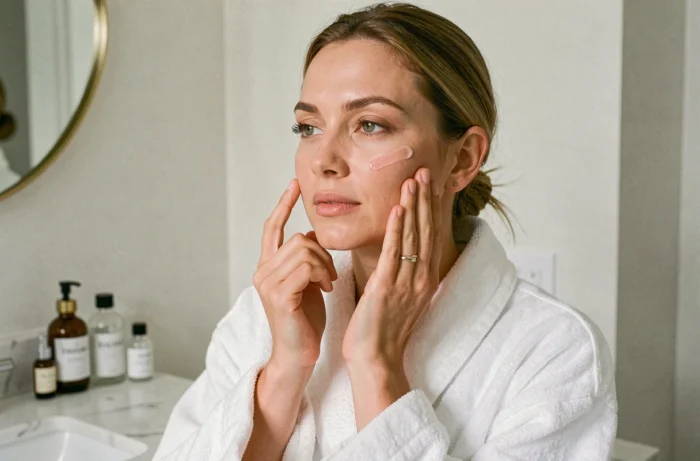
Between ten-step routines and ingredients with unpronounceable names, choosing daily beauty gestures can sometimes feel like an obstacle course. However, the trend emerging in 2026 goes in the opposite direction: fewer products, less irritation, more results. This article compares classic approaches with new care logics to identify what truly makes a difference for the skin, lips, hair, and makeup over the weeks.
Skin Barrier and Minimalist Routine: What Classic Beauty Guides Overlook
Most online beauty advice recommends stacking gestures: double cleansing, weekly exfoliation, serum, cream, oil. The movement known as Skin Barrier 2.0 counters this logic by placing the repair of the skin barrier at the center of the routine.
The principle is based on three pillars: very gentle cleansing (no harsh surfactants), a moisturizer formulated to restore the hydrolipidic film, and daily sun protection. Exfoliation, long presented as a necessary gesture, is reduced to a strict minimum to avoid weakening the skin.
This paradigm shift has concrete consequences for product choices. A face care rich in ceramides or low molecular weight hyaluronic acid becomes more relevant than a grain scrub, even if organic. Sensitive or reactive skin, often troubled by overly loaded routines, finds measurable benefits within a few weeks. Specialized resources like lebreakbeaute.fr allow exploration of these new daily care approaches.
Minimalist Beauty Routine vs. Multi-Step Routine: Comparison Table
To visualize the differences between these two care philosophies, here is a comparison based on the criteria that matter daily.
| Criterion | Multi-Step Routine (Classic) | Minimalist Routine (Skin Barrier 2.0) |
|---|---|---|
| Number of face products | 6 to 10 | 3 to 4 |
| Time morning + evening | Significantly longer | About halved |
| Risk of skin irritation | Higher (layering of actives) | Low (gentle formulas) |
| Exfoliation | 1 to 3 times a week | Occasional, or even eliminated |
| Formulation priority | Targeted actives (retinol, AHA, vitamin C) | Barrier repair (ceramides, sun protection) |
| Monthly budget | Higher (multiplicity of products) | Reduced (fewer bottles to replenish) |
The most notable gap concerns the risk of irritation. Multiplying actives increases the likelihood of sensitization, especially when retinol and exfoliating acids are used in the same week without adjustment.
What the Table Doesn’t Show
The minimalist routine requires a better understanding of one’s skin type. Choosing three suitable products demands more discernment than applying seven random treatments. The benefit is measured over time: skin with an intact barrier absorbs targeted actives better that can be reintroduced occasionally.
Microplastics in Cosmetics: A Regulatory Constraint Changing Formulations
Regulation (EU) 2023/2055, effective since October 17, 2023, restricts the intentionally added microparticles of synthetic polymers in cosmetic products. Deadlines are staggered according to the type of product:
- Rinse-off products (face and body scrubs, cleansing gels, shampoos, shower gels) must comply by October 2027 at the latest.
- Leave-on products (creams, lotions, treatments containing encapsulated fragrances) have a deadline set for October 2029.
- Formulations containing synthetic glitter and polyethylene exfoliating beads are the first to be reformulated.
For the daily beauty routine, this regulation has a direct impact. Plastic microbead scrubs are gradually disappearing from shelves in favor of mineral (rice powder, natural silica) or enzymatic alternatives. In contrast, some makeup products (foundations, lipsticks, eyeshadows) contain film-forming polymers whose technical replacement takes longer.
Reading Labels: Reflexes to Adopt
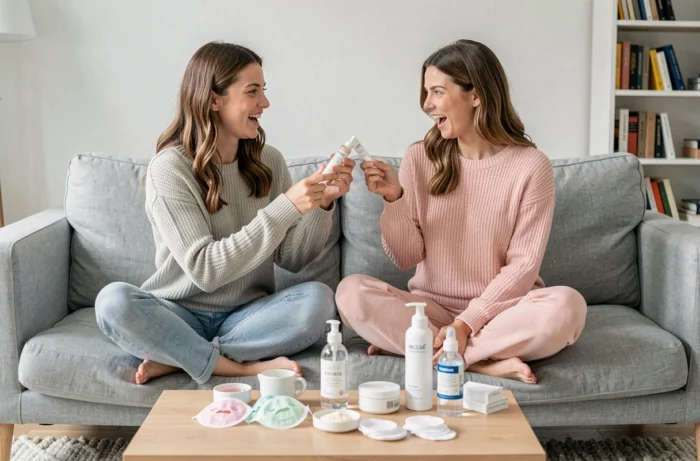
On a face or makeup product bottle, the INCI list remains the only reliable indicator. Terms like “polyethylene,” “acrylates copolymer,” or “nylon-12” signal the presence of microplastics. Checking the INCI list before purchasing becomes a beauty gesture in its own right.
Brands that reformulate ahead of regulatory deadlines usually mention it on their packaging or website. This is not a trivial marketing argument: it indicates a real technical adaptability.
Makeup and Lip Care: Gestures That Change the Result
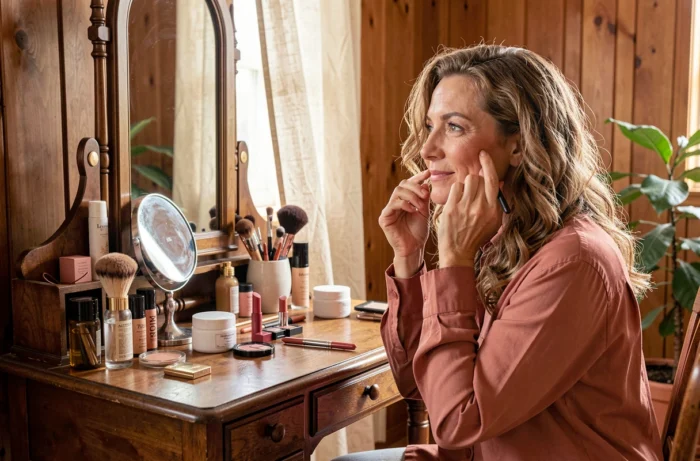
Facial makeup lasts longer and looks better when the skin is properly prepared. Applying foundation on dehydrated skin accentuates fine lines and creates a caked effect. A moisturizer applied a few minutes before makeup acts as a natural smoothing base.
For lips, daily maintenance with a repairing balm (without microplastics, of course) prevents chapping that sabotages any lipstick application. Well-hydrated lips hold color better and do not require touch-ups throughout the day.
The choice of eyeshadow and lipstick colors depends less on trends than on the skin’s undertone. Warm undertones pair better with copper or coral shades, while cool undertones suit pinks and plums. This criterion, rarely highlighted in quick guides, makes the difference between a makeup that brightens and a dull result.
Hair and Fragrance: Two Often Overlooked Areas
Hair reacts to the same logic as skin: too many styling products layered can weigh down the hair fiber. A gentle shampoo, a targeted conditioner, and a weekly treatment are sufficient in most cases. Reducing the number of hair products often improves texture faster than adding more.
Fragrance, applied to pulse points (wrists, neck, behind the ears), lasts better on hydrated skin. Spraying on clothing alters certain olfactory notes and can stain delicate fabrics.
The most effective beauty routine in 2026 is not the one that multiplies steps, but the one that selects each gesture based on what the skin actually needs, current regulations, and results observed week after week. Formulas change, habits do too: adapting your routine to what the skin truly demands remains the only advice that never goes out of date.


