
On a rainy Saturday afternoon, a kitchen table cluttered with fabric scraps and reclaimed paint pots: it’s often in this kind of context that we discover an activity that ends up structuring our weeks. Free time isn’t always abundant, but ideas to fill it with genuine creative pleasure often are. Instead of piling up suggestions, let’s explore some concrete avenues that can change the game when we want to break out of the routine.
Creative activities using reclaimed materials: reusing as a starting point
We often start by looking for new materials when we already have everything at hand. Glass jars, old sheets, pallets, paper scraps: reusing transforms constraints into creative choices. The anti-waste law AGEC is also pushing industries to valorize end-of-life materials, making resource centers and collection areas more accessible than before.
In practice, we can repurpose tin cans into painted pencil holders or use fabric scraps for no-pattern patchwork. The lack of “perfect” material forces improvisation, and that’s where creativity truly develops. There’s no need to order a thirty-euro DIY kit to get started.
This approach has an often underestimated advantage: it lowers the entry barrier. You can test a technique (screen printing on reclaimed fabric, collage on corrugated cardboard) without investing. If the activity isn’t enjoyable, you haven’t lost anything. You can also find numerous ideas to vary your hobbies on the Graines de Blogueuses website for hobbies, with formats suitable for all levels.
Creative hobbies in collective workshops: choosing based on sociability level
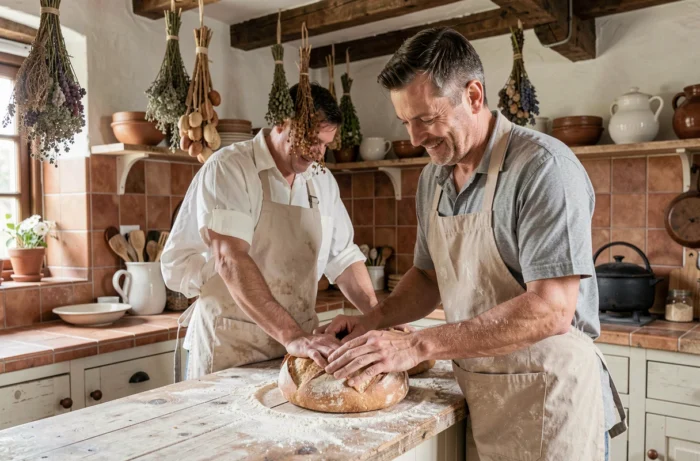
Practicing alone at home suits some moments. At other times, we seek connection. And this is a selection criterion that most activity lists overlook: the social format of the activity matters as much as the activity itself.
Social living spaces offer regular workshops for sewing, DIY, or manual creation, accessible with a simple annual membership. This is the case, for example, in Issoire, where this type of structure combines recurring workshops and occasional events. The association Cultures du Cœur Essonne reports that its participants associate these workshops with escaping daily life, social connection, and personal pride.
Three questions to ask before choosing a workshop
- Do you prefer a fixed group (same participants every week) or an open format where you come when you can? The first creates deeper bonds, while the second offers more flexibility.
- Do you need technical guidance (a facilitator who corrects, guides) or a shared space where everyone works on their project? Feedback varies on this point depending on the profiles.
- Is the location accessible without a car and at times that fit your schedule? A great workshop forty minutes away will eventually lead to not going anymore.
This filter quickly eliminates options that won’t last. A regular creative activity beats ten attempts abandoned after two sessions.
Original ideas to occupy your free time without a screen
The classic reflex when we have free time is to scroll. The alternative doesn’t necessarily involve complex activities. You can start small, with short formats that easily fit into a day.
The quick sketchbook
No need to know how to draw. Grab an inexpensive sketchbook, a marker, and draw what you see for five minutes. The goal isn’t the result but the gesture. Five minutes of daily sketching develops observation more effectively than a two-hour class once a month. After a few weeks, you can see the progress by flipping through the pages.
Plant dyeing on fabric
Onion peels, coffee grounds, walnut leaves: you can achieve surprising shades with kitchen scraps. The technique requires a bit of documentation (mordanting, soaking time), but the basic materials are limited to a pot and cotton or linen fabric. It’s a hands-on activity that combines experimentation and tangible results, with an almost scientific aspect.
Constrained writing
Writing a text by imposing a rule (no verb “to be,” only six-word sentences, describing a memory without adjectives) forces the brain to work differently. You only need paper and a pen. This practice is used in collective writing workshops but works very well solo in the evening.
Hands-on and creative activities: organizing your space without breaking the bank
A practical constraint that no one mentions: space. No matter how many ideas you have, if the kitchen table also serves as a desk and dining area, every creative session starts with fifteen minutes of clearing and ends with frustrating tidying up.
A dedicated creative workspace, even tiny, changes the regularity of practice. We’re talking about a board on trestles in a corner of the hallway, a rolling cart with ready-to-use materials, or a simple wooden box under a bed.
- Group materials by activity in pouches or transparent boxes to see the contents without opening them.
- Set a recurring time slot (even short) instead of waiting to have “the time” – time never presents itself spontaneously.
- Keep an ongoing project visible: a work stored in a closet is a forgotten work.
This type of organization isn’t spectacular, but it’s what separates a passing fad from a long-term creative hobby. Reclaimed materials, the neighborhood collective workshop, the sketchbook on the nightstand: each concrete choice brings you closer to regular practice. Passion doesn’t precede activity, it comes from practicing.


