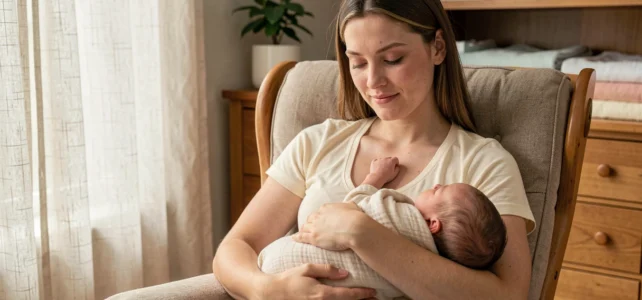
Welcoming a newborn requires resources that shopping lists cannot fully anticipate. Between recent medical recommendations on postnatal care, reforms to parental leave, and alerts about screen exposure, the guidelines for supporting baby on a daily basis have significantly changed in recent months.
Enhanced postnatal care: what the IGAS report changes for the first month of baby
A report from the General Inspectorate of Social Affairs (IGAS), published on August 5, 2026, recommends improving the perinatal pathway by integrating newborn monitoring and the psychological health of the mother right from the maternity discharge. The stated goal is the reduction of infant mortality and postnatal complications through continuity of home care.
This report advocates for a national strategic plan for perinatality 2027-2030 and a strengthened role for Maternal and Child Protection (PMI) centers. In practical terms, this means that parents can rely on a better-coordinated network of healthcare professionals for the first weeks.
Families looking to enjoy family on Happy Family will find additional resources to structure this support over the months, alongside the medical follow-up offered by the PMIs.
| Aspect of postnatal care | Before the IGAS report | IGAS 2026 Recommendations |
|---|---|---|
| Home visit after maternity discharge | Variable depending on regions, often late | Systematization in the first month |
| PMI – maternity coordination | Poorly structured | Continuous pathway with file transmission |
| Mother’s psychological health | Optional postpartum screening | Integrated into the first month follow-up |
| Public health objective | No dedicated national plan | Perinatal strategic plan 2027-2030 |

Parental leave and the presence of the second parent with the baby
The reform of parental leave, effective since July 2026, changes how both parents can support their baby on a daily basis. The extended duration allows the second parent to participate in care and domestic organization well beyond the first week.
This prolonged presence has measurable effects on the distribution of tasks related to the infant. The second parent acquires routines (bathing, changing, soothing) that continue after returning to work, rather than remaining in a role of occasional assistance.
Concrete effects on family daily life
A longer leave also helps relieve the mother during the physical recovery period post-delivery. The fatigue from nighttime awakenings is shared, which contributes to preventing parental burnout.
For single-parent families or those where the second parent cannot extend their absence, the support from PMIs and the home visits recommended by IGAS make perfect sense. Postnatal support does not rely solely on parental leave, it is based on a network of professionals.
Screens before three years: the key guidelines for baby development
The recommendations regarding screen exposure for young children have become stricter. Several scientific sources converge on the same conclusion: avoiding screens during the first thousand days of life protects the child’s cognitive, language, and motor development.
The temptation is real. A screen can calm a fussy baby in seconds. However, studies point to a link between early exposure and delays in language acquisition.
Concrete alternatives to screens in daily life
- Skin-to-skin contact remains a powerful soothing tool, recommended by the High Authority of Health (HAS) even beyond maternity, and costs nothing
- Sensory stimulation workshops (textures, sounds, everyday objects) stimulate the infant’s curiosity without visual overload
- Free movement, which involves allowing the baby to explore their movements on a firm mat without being propped up in a bouncer, promotes their postural development at their own pace
These alternatives do not require specific equipment. They rely on the availability of the adult, which the parental leave reform directly facilitates.
Skin-to-skin and breastfeeding: an HAS document to know
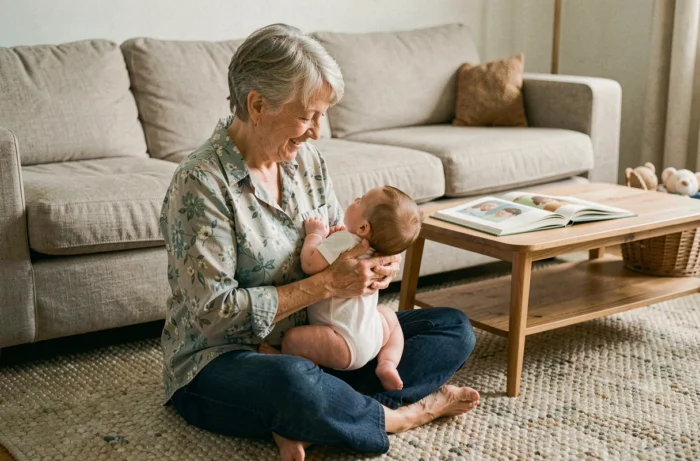
The HAS adopted in April 2026 a “patient safety flash” document dedicated to skin-to-skin contact and breastfeeding of the newborn in maternity. This document recalls the safety conditions to be respected during the practice: visible baby position, clear airways, continuous monitoring.
Skin-to-skin contact is not reserved for the delivery room. It can be practiced at home by both parents. The benefits on thermal regulation, the baby’s heart rate, and the establishment of breastfeeding have been documented for several years, but the safety conditions remained poorly formalized before this document.
Breastfeeding: a supported choice, not an imperative
The enhanced follow-up for the first month recommended by IGAS includes support for breastfeeding for mothers who wish it, without making it an obligation. Lactation consultants, independent midwives, and PMIs are the first recourse in case of difficulty.
For parents who choose bottle-feeding, the same structures ensure monitoring of the infant’s weight gain and hydration. The mode of feeding does not alter the quality of the parent-baby bond.
The support during the first weeks with a baby relies less on the accumulation of equipment than on the coordination between parents and healthcare professionals. The IGAS report, the parental leave reform, and HAS recommendations outline a more structured framework than it was recently. It is these institutional guidelines, combined with simple daily gestures, that make a difference in the quality of life for the infant and their parents.