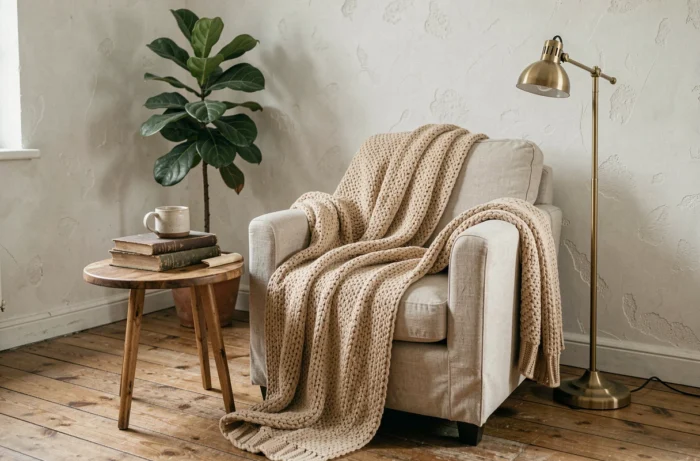
An interior perceived as welcoming does not solely rely on aesthetic choices. The feeling of a cocoon in a home depends on a set of parameters ranging from the quality of the air breathed to the thermal behavior of the chosen materials. Before selecting a color palette or stacking cushions, it is useful to consider what surfaces, furniture, and light sources actually produce in the inhabited space.
Indoor air quality: the invisible parameter of a cozy home
Transforming your interior into a welcoming cocoon often starts with the purchase of new furniture, scented candles, or decorative paints. These elements can contribute to volatile organic compound emissions in the ambient air. Particle boards used in entry-level furniture, incense, and certain wall finishes release pollutants that degrade air quality, according to an article from Daily Geek Show published in September 2026.
In France, construction and decoration products have a regulatory labeling of volatile pollutant emissions ranging from A+ to C. This indicator, often overlooked during decor shopping, allows for sorting paints, floor coverings, and furniture according to their impact on indoor air. Choosing products rated A+ does not necessarily cost more, but it does require checking the label before purchase.
Daily ventilation and maintenance of the mechanical ventilation system complement this approach. Ventilation grilles obstructed by furniture or curtains reduce air renewal. By looking for home tips on Sous Tous les Angles, this logic is reinforced: the comfort of a space also comes from what is not seen.
Sustainable materials and reuse: an alternative to decorative renewal
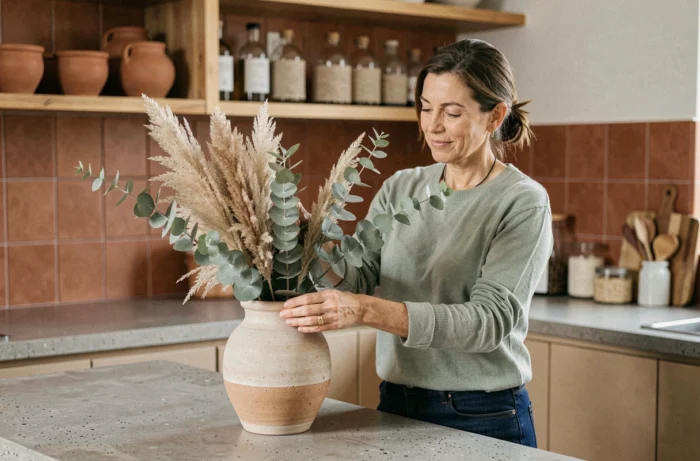
Competitors emphasize natural materials (wood, wool, linen) to create a warm atmosphere. The less addressed angle concerns the origin and durability of these materials. The recent trend, documented by ISSI Magazine in September 2026, leans towards reuse and sustainable design: recycled materials, handcrafted pieces, objects designed to last.
Buying a second-hand solid wood piece rather than a new piece made of particle board solves two problems at once. Old wood has already released most of its volatile compounds. And its patina adds a texture that new industrial items do not replicate.
Concrete criteria for choosing decorative materials
- Check the emission label (A+ preferred) on paints, adhesives, and floor coverings before any purchase in-store or online
- Favor textiles made from natural fibers (linen, cotton, wool) with a sufficiently dense weight to provide tactile warmth in the living room or bedroom
- Consider second-hand or artisanal furniture, which limits pollutant emissions and adds a unique character to the space
- Avoid accumulating ephemeral decorative objects that end up cluttering without truly enhancing the cocooning atmosphere
Lighting and color temperature: what makes a living room truly warm
Artificial light plays a crucial role in the perception of a cozy interior. Field feedback varies on this point: some designers recommend multiplying light sources, while others insist on reducing overall intensity. Both approaches converge on a technical parameter often overlooked.
The color temperature of bulbs conditions the ambiance more than their number. A warm light bulb (around 2,700 kelvins) creates an enveloping atmosphere. A cool light bulb, even dimmed, maintains a clinical feel. Replacing all the bulbs in a room with warm temperature models transforms the space without any other decorative changes.
Natural light remains the foundation. Thick linen or cotton curtains filter without blocking, allowing daytime brightness while adding a textile layer to the decor. In the evening, three light points at different heights are sufficient for a living room: a low lamp near the sofa, indirect lighting above, and a candle (unscented, to limit particles) on a side table.
Multifunctional furniture for small spaces: cocoon without clutter
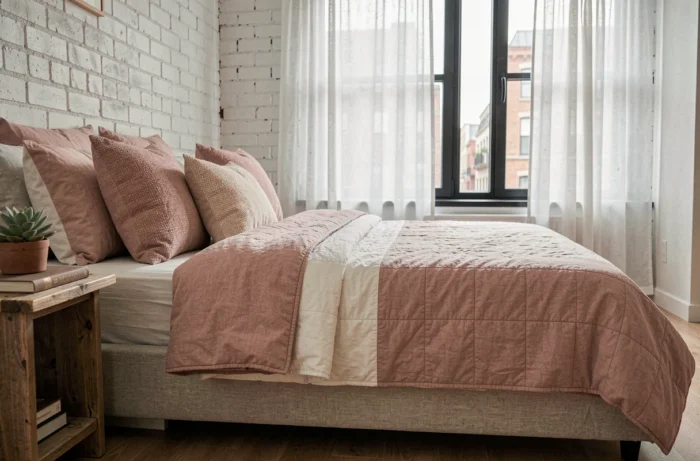
In urban housing where space is limited, the accumulation of decorative furniture produces the opposite effect of what is sought. An overloaded interior does not give a cocoon impression, but rather a feeling of confinement. Multifunctional furniture offers a concrete response to this constraint.
An entry bench with integrated storage, a coffee table that lifts into a desk, a pouf with storage space: these pieces free up floor space. The empty floor space contributes as much to comfort as an additional cushion. Smooth circulation in a room contributes to the feeling of welcome.
The common mistake in small interiors
Many decor guides recommend adding elements (throws, layered rugs, fairy lights) without considering the available volume. In a studio or a one-bedroom apartment, each added object reduces perceived space. The reverse approach, removing a piece of furniture to gain breathing room, sometimes produces a more cocooning result than adding ten accessories.
- Measure the remaining circulation space after each addition of furniture or accessory
- Choose light colors on the walls to visually compensate for the reduction in surface area
- Group functions (storage, seating, decoration) in unique pieces rather than multiplying single-function objects
Transforming a house into a welcoming cocoon does not involve a shopping list. Sustainable interior comfort relies on choices of healthy materials, appropriate lighting, and a space that breathes. Pollutant emission labeling, bulb color temperature, and circulation in each room are three concrete, verifiable levers that change the perception of an interior without requiring renovations.


