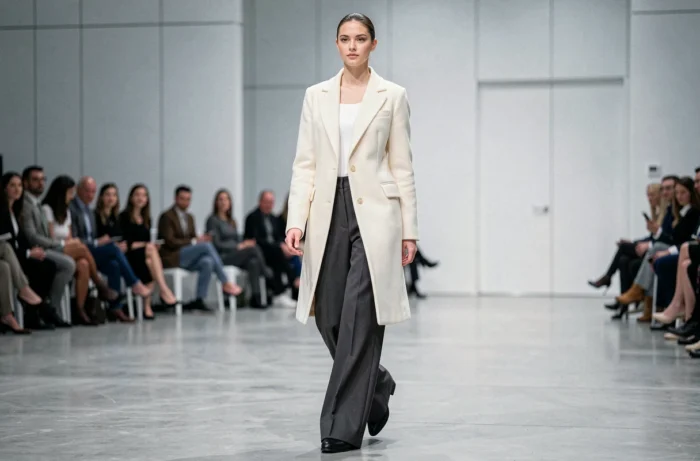
The runway model occupies a unique place in the fashion production chain. Their work goes beyond walking on a catwalk: they translate a designer’s creations into movement, shape public perception, and contribute to the commercial strategy of brands. Understanding this profession requires looking beyond the glamorous image to examine the concrete mechanisms that link the model’s body to the aesthetic, economic, and social stakes of the industry.
Runway model and catwalk technique: what the public doesn’t see
During a fashion show, each walk rarely lasts more than a minute. This brevity demands a technical mastery that spectators often underestimate. The model must adapt their stride to the garment being worn: a flowing dress does not call for the same rhythm as a structured suit or a heavy coat.
The gaze, shoulder posture, and pace of steps are calibrated during rehearsals with the show’s artistic director. Each step on the catwalk serves the designer’s narrative, not the model’s personal expression. This constraint distinguishes the runway model from the photo model, who has more latitude to interpret a brief.
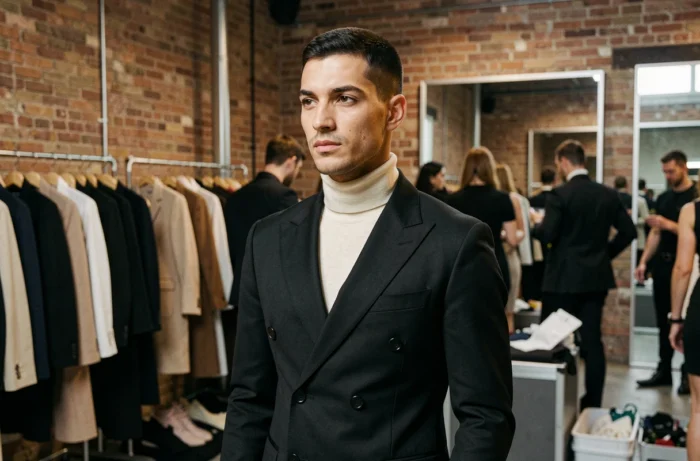
Managing stress is another technical aspect rarely discussed. Outfit changes backstage can occur in less than two minutes, with the help of dressers. A delay, a zipper snag, or a poorly fitting shoe can jeopardize the walk. Seasoned professionals develop an adaptability that involves both physical skill and nerve resilience.
To better understand the role of the runway model in its technical dimension, one must consider this combination of physical discipline and responsiveness as the foundation of the profession.
Influence of models on fashion trends and buying behavior
The runway model acts as a filter between creation and market. When a model wears a garment on the catwalk, they provide a reference silhouette that will be relayed by the media, professional buyers, and social networks.
The choice of casting directly influences the perception of a collection. A brand that selects models with varied body types sends a signal about its positioning. Conversely, a homogeneous casting communicates a different vision of the brand. These decisions are never trivial: they influence press coverage, online comments, and, by cascading effect, sales.
The role of social media
The most followed runway models on social platforms amplify the visibility of the creations they wear. A catwalk appearance captured on video can generate millions of views in a matter of hours. This exposure changes the traditional dynamic where only buyers and journalists present in the room decided the commercial fate of a piece.
The public now accesses fashion shows in real-time. Models thus become vectors of influence that extend beyond their initial role of presentation. Some brands incorporate this data right from the casting stage, favoring models whose digital audience guarantees additional media resonance.
Body inclusivity on the catwalks: a documented regression
After visible advances in the early 2020s, the diversity of body types on the catwalks has seen a marked regression. According to an analysis by Vogue Business concerning the fall-winter 2026 season, the vast majority of looks presented in New York, London, Milan, and Paris were worn by so-called “straight-size” models. Plus-size silhouettes remained marginal.
This observation raises questions about the real impact of commitments made by several fashion houses. Field reports vary on this point: some casting directors mention constraints related to the one-size samples produced for fashion shows, while others point to a deliberate aesthetic choice to return to a very slim body norm.
The debate has changed in nature
The question is no longer solely about “who walks the runway,” but about the conditions under which models work and how their image is used after the show. The available data do not allow for a conclusion that the industry has definitively abandoned its inclusivity goals, but the observable trend in recent seasons contradicts the stated intentions.
- Runway samples are mostly designed in a single size, which mechanically limits the diversity of models cast.
- The pressure from social media has made the subject more visible without necessarily changing casting practices in depth.
- The regulatory framework remains limited in most countries, except for a few recent legislations like New York’s Fashion Workers Act.
Legal framework of modeling: the Fashion Workers Act as a turning point
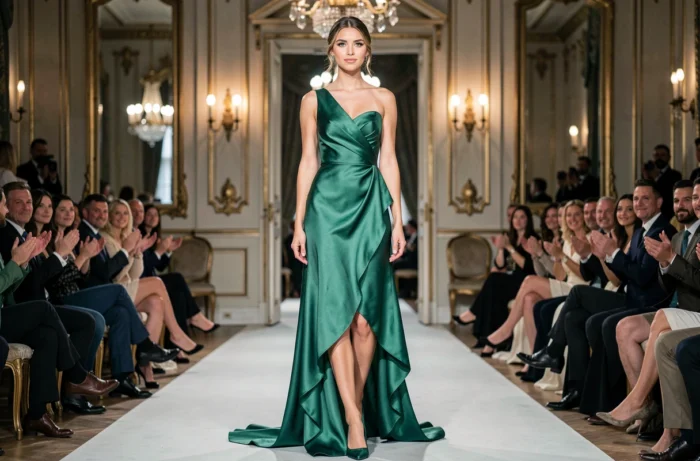
Effective June 19, 2025, New York’s Fashion Workers Act introduced substantial protections for models and their relationships with agencies. This law mandates a public registry, contractual transparency, and safeguards regarding the digital replicas of models.
One of the most significant points concerns avatars and digital doubles. With the rise of 3D modeling in fashion, several agencies proposed digitizing models to reuse their image without additional compensation. The New York law now regulates these practices by requiring explicit consent and detailed contractual agreements.
A precedent for other markets
This legislation serves as a reference for European professionals. In France, the Labor Code regulates modeling (especially for minors), but no specific provision regulates the use of digital replicas of models. The gap between the American and European frameworks could become a negotiation topic in the coming years as fashion shows increasingly integrate immersive technologies.
The profession of runway model stands at the intersection of technical constraints, image stakes, and a changing legal framework. Recent developments, from the regression of inclusivity on the catwalks to new contractual protections, outline a professional landscape where media visibility does not always guarantee working conditions commensurate with the influence exerted on the fashion industry.


