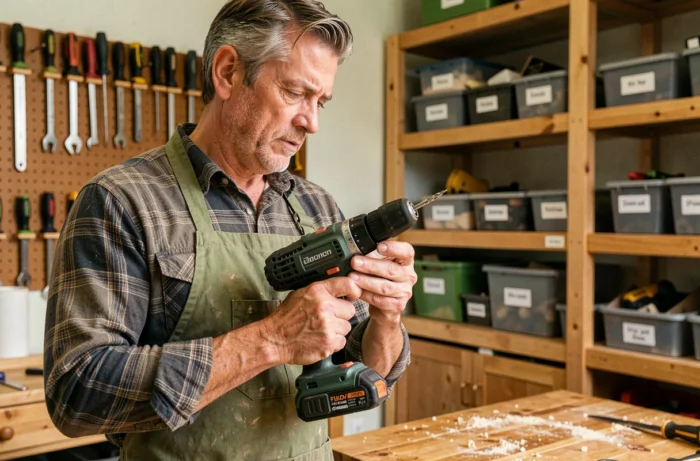
Buying a first set of tools or completing an existing toolbox presents a concrete problem: the market offers hundreds of references, from a two-euro screwdriver to a plunge saw costing several hundred euros. Choosing your home improvement equipment is less about ticking off a list and more about balancing budget, type of planned work, and the lifespan of the tools.
Regulation Machinery 2023/1230: What Changes for Power Tools
Competing articles list tools without mentioning the regulatory framework that will change the in-store offerings. The regulation (EU) 2023/1230 on machinery comes into effect on January 20, 2027. It replaces Directive 2006/42/EC and applies directly in all member states, without national transposition.
For power tools sold to consumers, the consequences are tangible. The regulation mandates the integration of cybersecurity into machine safety: critical hardware and software components must be protected against tampering. Connected tools (drills with adjustment apps, saws with Bluetooth modules) are directly affected.
If you buy an electric tool in 2026, it will comply with the old directive. There is no obligation to replace it after January 2027, but new models released on the market will have to meet enhanced safety requirements. For a DIY enthusiast hesitating between investing now or waiting, this deadline is worth considering, especially for connected equipment.
By searching for equipment on bobolebrico.fr, we see that product sheets are starting to mention regulatory compliance, a useful indicator for anticipating the transition.
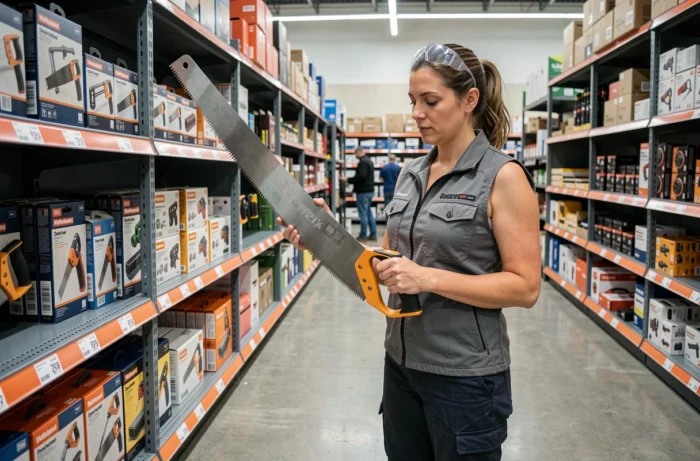
Hand Tools or Electric: The Key Selection Criteria
A good-quality hand tool lasts for decades without special maintenance. An entry-level electric tool does not handle regular use well: overheating motors, batteries losing autonomy after two years, plastic parts breaking. The cost of replacing lithium-ion batteries often represents half the price of a new device.
What the Type of Work Determines
For light fastening (frames, shelves, electrical outlets), a set of Phillips and flat screwdrivers, a universal pliers, and a hammer cover most needs. The drill-driver only becomes truly useful when drilling hard materials (concrete, solid brick) or when multiplying screwdriving tasks.
- Common fastening work: screwdriver, hammer, tape measure, spirit level, adjustable wrench. Moderate budget, maximum versatility.
- Woodworking (custom shelves, small furniture): back saw or Japanese saw for precision, clamps, rasp or file, carpenter’s square. A jigsaw is only justified for frequent curved cuts.
- Work on load-bearing walls or light masonry: percussion drill, set of concrete drill bits, precision screwdriver for electrical work, detector for embedded cables.
- Finishing and painting: spatulas of various widths, paint tray, roller suitable for the surface, sandpaper of varying grits, protective tarp.
A tool suited to the material avoids costly mistakes: drilling tiles with a concrete bit cracks them, sanding soft wood with too fine a grit removes nothing.
Materials and Consumables: The Underestimated Budget Item
Consumables represent a significant portion of a DIYer’s total budget. Drill bits, saw blades, abrasive discs, anchors, screws, adhesives, masking tapes—all wear out and need to be repurchased.
Stocking a set of common consumables prevents interrupting a project to rush to the store. Expansion anchors for drywall, chemical anchors for hollow stone, wood screws of various lengths, washers, nuts: a basic assortment fits in a compartmentalized storage box.
Field reports vary on this point, but buying store-brand consumables often yields results comparable to premium brands for domestic use. The difference is more pronounced with drill bits: a generic high-speed steel (HSS) bit drills light steel without issue, whereas a low-end concrete bit loses its carbide after just a few holes in reinforced concrete.
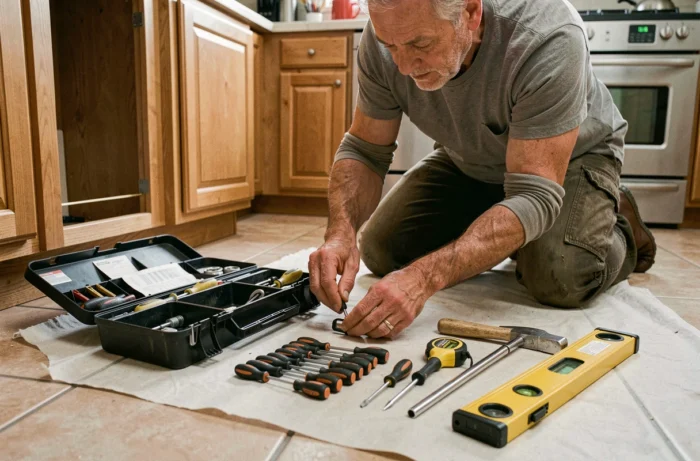
Safety and Personal Protection: The Non-Negotiable Minimum
- Protective eyewear: during any drilling, sanding, or cutting. Metal, wood, or plaster dust projections can cause irreversible eye injuries.
- Appropriate gloves: cut-resistant gloves for handling sheet metal or glass, latex gloves for chemicals (strippers, epoxy adhesives). No gloves near a grinder, as fabric can get caught.
- Hearing protection: a circular saw or grinder exceeds the auditory comfort threshold. Foam earplugs are sufficient for occasional use.
Wearing personal protective equipment reduces the majority of DIY injuries. The cost of a complete kit (glasses, gloves, earplugs) remains very low compared to a trip to the emergency room.
Project Advice in Store: A Service to Utilize
More and more large DIY stores offer free diagnostic appointments: needs assessment, equipment selection, budget estimation. This type of support helps target the right tool without fumbling through the aisles.
Before buying, describing your project to an advisor helps avoid oversizing (buying a router to round a corner) as well as undersizing (trying to drill concrete with a non-percussion screwdriver). Defining the project before choosing the tool remains the most effective sequence for suitable equipment and controlled budgeting.


