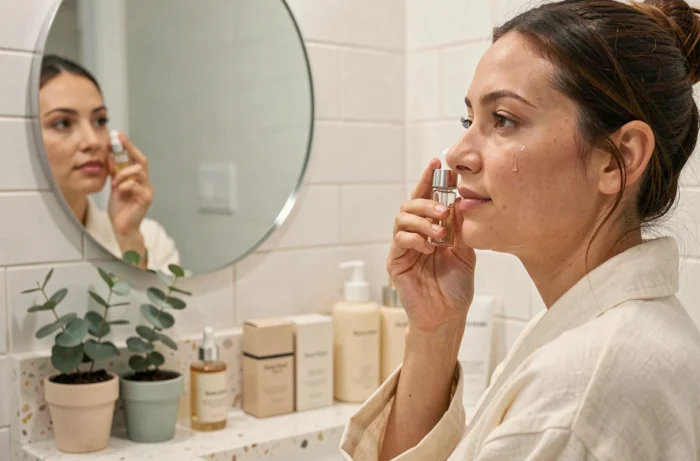
The European regulation on cosmetics is entering a disruptive phase that redefines what brands can claim, formulate, and label. Rather than listing makeup or skincare trends that are already widely documented, we focus here on the regulatory constraints and formulation shifts that will shape the beauty and wellness market in the coming months.
ECGT Directive and cosmetic claims: what changes on September 27, 2026
The Directive (EU) 2024/825, known as ECGT, applies to all B2C communications starting from September 27, 2026, with no transition period. For beauty brands, the shock is direct.
Generic terms like “clean beauty,” “natural,” “green,” or “eco-friendly” are now prohibited unless the brand demonstrates excellent environmental performance recognized by an official label (such as the EU Ecolabel). Pseudo-labels created by industries without an independent certification scheme are also banned.
On the climate front, claims such as “carbon neutral” or “net zero” based on carbon credits outside the value chain are prohibited. Only claims based on emission reductions in the product’s life cycle, auditable by a third party, are allowed. We observe that several French brands positioned in the “green” niche are already reformulating their packaging and product sheets to anticipate the deadline.
This tightening will mechanically revalue serious third-party certifications and penalize the widespread greenwashing that has long served as a marketing lever in the skincare and wellness sector. You can follow the news on the Belle et Unique website to identify brands that have already adapted their communication to this new framework.
Labeling of fragrance allergens: new obligations by July 31, 2026

Another critical deadline for laboratories and distributors: the obligation for expanded labeling of fragrance allergens comes into effect on July 31, 2026. The list of substances to be declared on cosmetic product packaging is significantly lengthening.
In practice, this means that many facial, body, and almost all fragrance products will need to display more detailed INCI lists. Formulations containing certain common aromatic compounds will either need to reformulate or accept a more loaded labeling that may deter consumers.
For professionals in aesthetics and spas, this evolution requires an update of product technical sheets and increased vigilance during client consultations, especially for reactive skin. Transparency about allergens becomes a selling point, not a handicap, provided that teams are trained.
Reformulation and ingredients under regulatory pressure
The Omnibus regulation continues to restrict the list of substances allowed in European cosmetics, forcing formulators to anticipate their adjustments now.
This context pushes brands toward shorter formulas, with better-documented active ingredients. We recommend monitoring three reformulation axes:
- The replacement of monitored preservatives with alternative preservation systems (fermentation, airless packaging), aligning with the trend of fermented and probiotic skincare observed in the Korean market
- The gradual abandonment of certain controversial UV filters in sunscreen products and day creams with SPF, in favor of mineral or next-generation filters
- The reduction of the number of ingredients per formula, which aligns with consumer demand for simplified routines and an embraced skinimalism
Beauty and wellness: weak signals from consumers
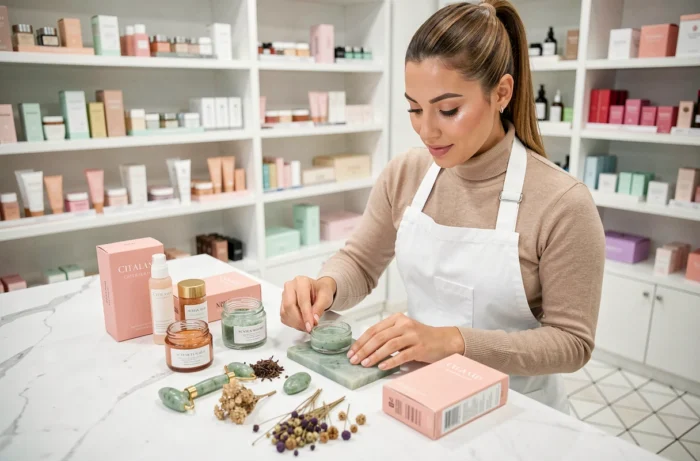
Global wellness-related queries surpass those focused on corrective makeup. Consumers are looking for products that combine facial care, stress management, and body routines in a unified approach.
Facial massage, face sculpting, and at-home LED devices are no longer niches. They are integrated into daily routines of a few minutes, driven by a generation that sees care as an act of wellness as much as aesthetics.
On the spending side, CNBC data from September 2026 confirms that consumers are maintaining their beauty and wellness budgets despite a tense economic context. Beauty remains a resilient spending category, which explains why brands continue to invest in product innovation and personalization.
What these changes mean for aesthetics professionals
Institutes, spas, and care professionals must integrate these regulatory changes into their daily practice. Client consultations can no longer be limited to recommending a “natural” or “clean” product without verifying that the brand has a certification compliant with the ECGT directive.
Ongoing training on the new allergen lists becomes a prerequisite for any professional offering facial or body treatments that include scented products. Aesthetic treatment rooms that anticipate these requirements position themselves in a trust niche that consumers increasingly value.
- Check the ECGT compliance of brands distributed in the institute before September 2026
- Update patch test protocols by integrating the expanded list of fragrance allergens
- Document the INCI compositions of cabin products to answer questions from informed clients
The beauty and wellness market is not just going through a simple season of aesthetic trends. The European regulatory constraints of 2026-2027 are reshuffling the cards between compliant brands and those lagging behind, between trained professionals and those overwhelmed. The formulation and communication choices made now will determine the credibility of industry players for the years to come.


